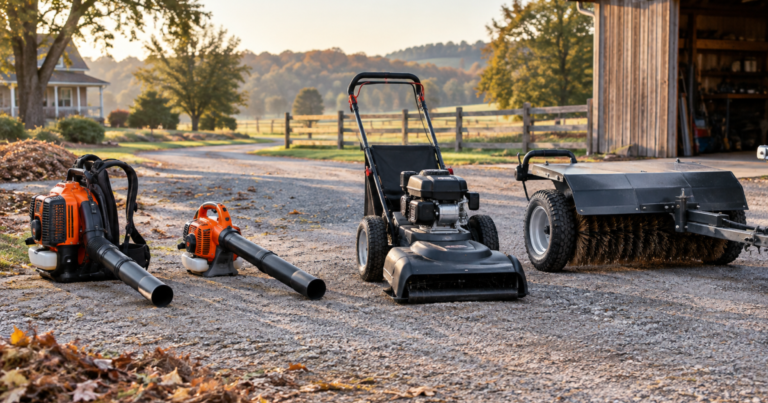
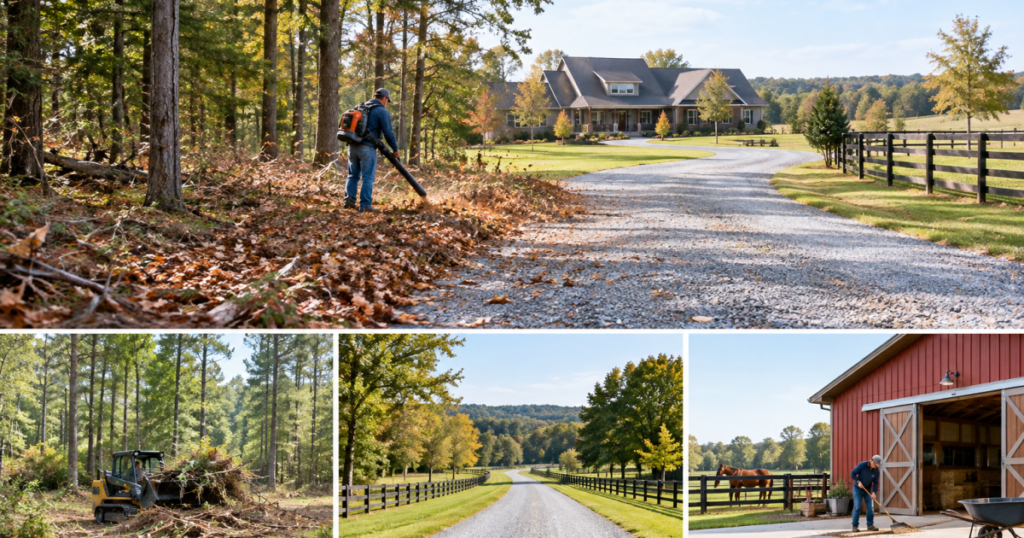
A rough property rarely needs to be made perfect. It needs a working loop: clear access, safer footing, cleaner thresholds, and debris moved somewhere it will not blow right back. The best acreage cleanup transformations start by choosing the zone, reading the surface, and deciding where every pile is going before the blower, rake, cart, or mower comes out.
For more property-scale cleanup thinking beyond this single plan, the Blog is the better next stop than guessing from a suburban yard routine.
What to know first
A cleanup transformation is not just a before-and-after photo. On a larger property, it is a workflow change. The visible improvement comes from linking several small wins: a house apron that stays dry, a barn door that stops collecting chaff and leaves, a driveway edge that drains, and a wooded path that can be walked without kicking through ankle-deep debris.
The useful question is not “How do I clear all of this?” It is “Which route gets me the most control for the least backtracking?” Once you answer that, equipment choices become clearer. A backpack blower may handle sustained leaf movement, a handheld blower may be enough for porches and equipment pads, and a tarp or cart may do more for the final 100 feet than more air speed ever will.
Transformation 1: Wooded lot from leaf mat to usable walking loop
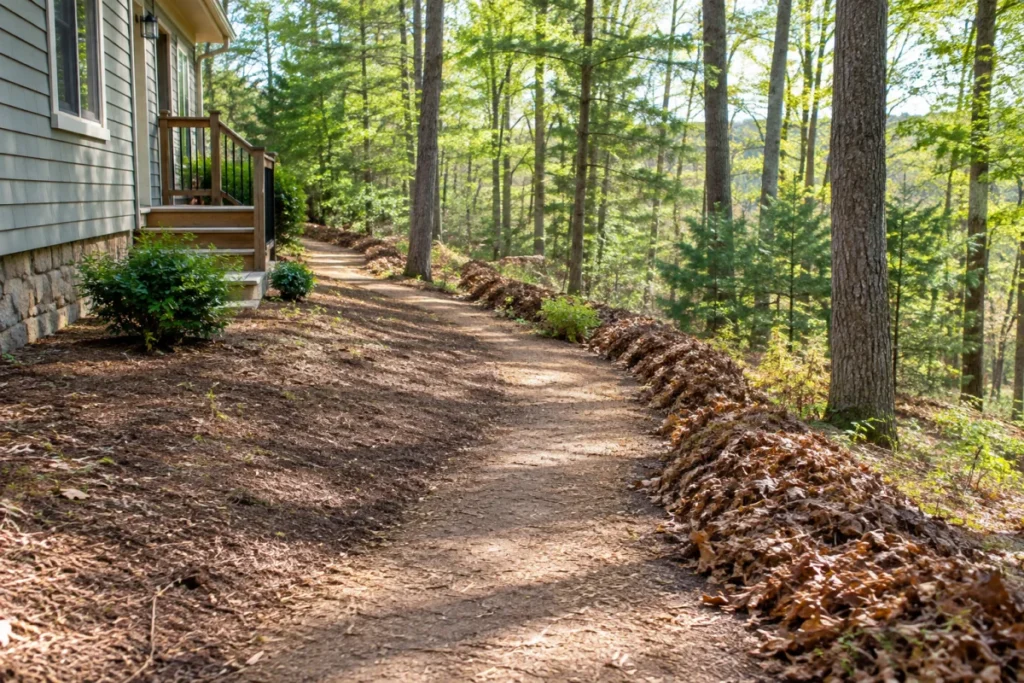
Before: Leaves are packed around the house edge, scattered across a footpath, and dammed against low spots. Small branches sit mixed into the leaf layer, so every pass with a blower catches on sticks and roots.
After: The house perimeter is opened up, the main footpath is visible, and leaves are staged in low windrows along the downhill side where they can break down, be carted, or be mulched later.
The working sketch
- Start line: house foundation, deck steps, or the main door you use daily.
- Direction: work away from structures, not around them in circles.
- Debris destination: a leaf-mold area, compost edge, brush line, or collection tarp.
- Stop point: one loop you can walk cleanly, not the entire woods.
On wooded ground, the first pass should separate hazards from bulk material. Pull out limbs, wire, old hose, and larger sticks before trying to move leaves. Blowers hate tangled debris, and so do ankles. If the leaf layer is damp, break it into shorter pushes instead of trying to roll the whole mat at once. A few controlled windrows beat one heroic pile that collapses every time the breeze changes.
Leave some organic material where it helps the land. The aim is a usable property, not a vacuumed forest floor. Keep leaves out of drainage routes, steps, work areas, and heavy foot traffic, then decide what can remain as mulch under trees.
Transformation 2: Horse property from dusty clutter to cleaner working zones
Before: Hay scraps, leaves, dust, and bedding drift gather near gates, barn doors, wash areas, and tack-room thresholds. Cleanup keeps happening in fragments, so debris migrates from one working area to the next.
After: The barn approach, gate swing areas, and equipment paths are cleared in one deliberate loop. Fine debris is moved away from openings, and heavier material is collected instead of blown into stalls or feed areas.
The working sketch
- Start line: the main barn door or feed-room threshold.
- Direction: push debris outward and downwind when conditions allow.
- Debris destination: manure pile area, compost zone, cart, or approved disposal point.
- Stop point: clean gate swings and a clear path between barn, turnout, and parking.
Horse properties reward calm, planned cleanup. Avoid blasting fine dust toward stalls, feed, water, or animals. Use lower throttle around loose bedding and dry soil, then switch to rakes, brooms, shovels, or a cart where a blower would simply aerosolize the mess. This is one of those jobs where more power can make the wrong problem move faster.
Protecting your eyes and lungs matters when dry hay, grit, and bedding dust are involved. A face shield such as the NoCry Safety Face Shield can be part of a broader protection setup, along with appropriate eye, hearing, and dust protection for the conditions. Product links on this site may be monetized; the details are explained in our Affiliate Disclosure.
The biggest improvement on a horse property is usually not a spotless yard. It is reducing the daily irritation points: gate areas that do not snag boots, thresholds that do not track debris indoors, and equipment lanes that remain usable after wind, chores, and a few wheelbarrow trips.
Transformation 3: Long gravel driveway from leaf trap to open access lane
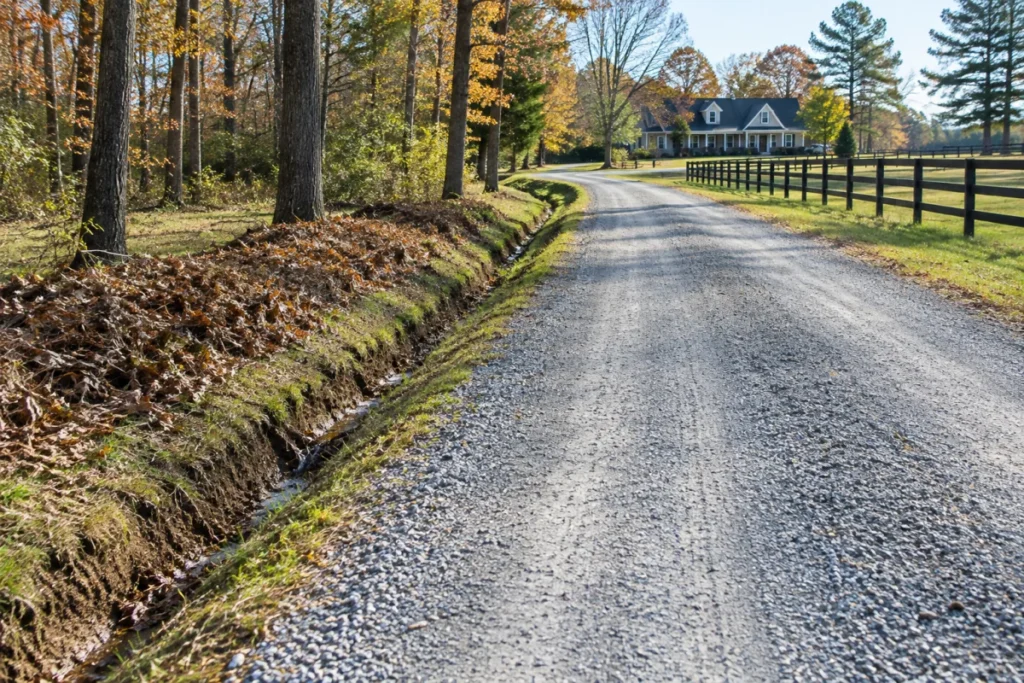
Before: Leaves collect along the crown, in tire tracks, and against ditch edges. A hard blower pass throws gravel, fills drainage lines, and leaves half the debris waiting for the next wind to bring it back.
After: The drive surface is open, ditch flow is visible, and debris is staged beyond the edge instead of scattered across the stone. The road still looks like a rural drive, not a showroom floor, and that is fine.
The working sketch
- Start line: the house apron, parking pad, or road entrance.
- Direction: work with the crown and natural drainage, not against both.
- Debris destination: outside the ditch line, into a collection zone, or onto a tarp for removal.
- Stop point: the first 200 feet of problem area before expanding the route.
Gravel drives call for restraint. Keep the nozzle higher than you would on pavement and use enough air to lift leaves without plowing stone. If the drive has a ditch, do not pack leaves into it just because they disappear from the driving surface. That trade looks good for an hour and becomes a drainage problem during the next hard rain.
For a long drive, divide the work into stations: apron, first bend, shaded wet section, culvert area, and road entrance. Clear each station to a destination before moving on. This prevents the common rural-driveway mistake of pushing leaves a long distance, getting tired, and abandoning a pile right where wind and traffic will return it.
How to choose the right cleanup route
The route matters more than the machine at the beginning. A high-output blower, tow-behind sweeper, mower, rake, tarp, or utility cart all perform better when the destination is already chosen. Think in debris streams instead of chores.
- Dry leaves: move well in windrows, but they also scatter easily. Work in shorter pushes when wind is shifting.
- Wet leaves: need smaller bites and may be better staged for later collection or mulching.
- Dust and fine bedding: should be controlled, not blasted toward doors, animals, vehicles, or neighbors.
- Sticks and storm debris: should be pulled out early so they do not jam rakes, sweepers, mowers, or collection gear.
- Gravel and loose soil: demand lower aggression and better nozzle control than paved areas.
If you are comparing equipment later, compare it against your route. A tool that is excellent for repeated 20-minute cleanup loops around barns may not be the same tool you want for a long fall session under mature hardwoods. Likewise, a machine that moves leaves quickly still needs a cart, tarp, mower, compost area, or disposal plan to finish the job.
Small details that make the after photo last
The lasting transformation is maintenance rhythm. Big cleanups are satisfying, but the property stays under control through short repeat passes. Walk the route after wind, rain, mowing, or a heavy chore day and clean the pinch points first: culverts, doorways, gates, steps, parking edges, and the narrow spots where equipment turns.
Store tools where the route starts, not where the garage happens to have an empty corner. Keep hearing protection, gloves, safety glasses, and fuel or batteries organized with the tool that uses them. Friction is the enemy here. If setup takes 20 minutes, the quick cleanup pass will keep getting postponed until it becomes a Saturday-sized problem.
There is also no shame in leaving low-priority ground alone. A wooded back corner can hold leaf litter. A rough field edge does not need manicuring. Put effort where it protects access, drainage, animal care, buildings, and the places people actually walk or work.
Practical takeaway
The cleanest-looking acreage cleanup transformations come from clear boundaries, not endless effort. Pick one visible working zone, define the route, choose the debris destination, and use equipment that fits the surface and session length. The result is a property that feels managed rather than constantly behind.
A simple way to keep the work honest is to rank each possible zone by consequence. If ignoring it can cause slippery footing, blocked drainage, animal-care headaches, vehicle access trouble, or building moisture problems, it moves up the list. If ignoring it only looks messy from a distance, it can wait. That one filter prevents a lot of wasted time on cosmetic edges while the real problem areas keep collecting leaves, dust, and runoff.
Match the session to the property, not your ambition. A 30-minute cleanup might be enough for porch steps, the barn threshold, and the first gate. A two-hour block can handle a driveway station or wooded walking loop. Full-day cleanups should be saved for jobs with a clear staging plan, because fatigue is when piles get left in bad places, gravel gets pushed too hard, and debris ends up in ditches, stalls, or equipment paths.
- Before you start: check wind direction, wet spots, gate swings, culverts, and where the pile will actually go.
- While you work: stop when the route is functional, not when every leaf is gone.
- After the pass: walk the same path once and look for rebound areas where debris will drift back first.
The best cleanup plan also leaves room for disposal capacity. If the cart, compost edge, burn-permitted brush area, or municipal pickup limit is already full, keep the session smaller. Moving debris twice is usually what makes acreage cleanup feel bigger than it is. Finish one manageable route cleanly, then let that success set the pattern for the next working zone.
When you are ready to plan the next zone, start from the Home page and work outward by task: leaves, dust, storm debris, driveway access, barn areas, and storage. That order keeps cleanup practical, repeatable, and far less exhausting than trying to win the whole property in one pass.